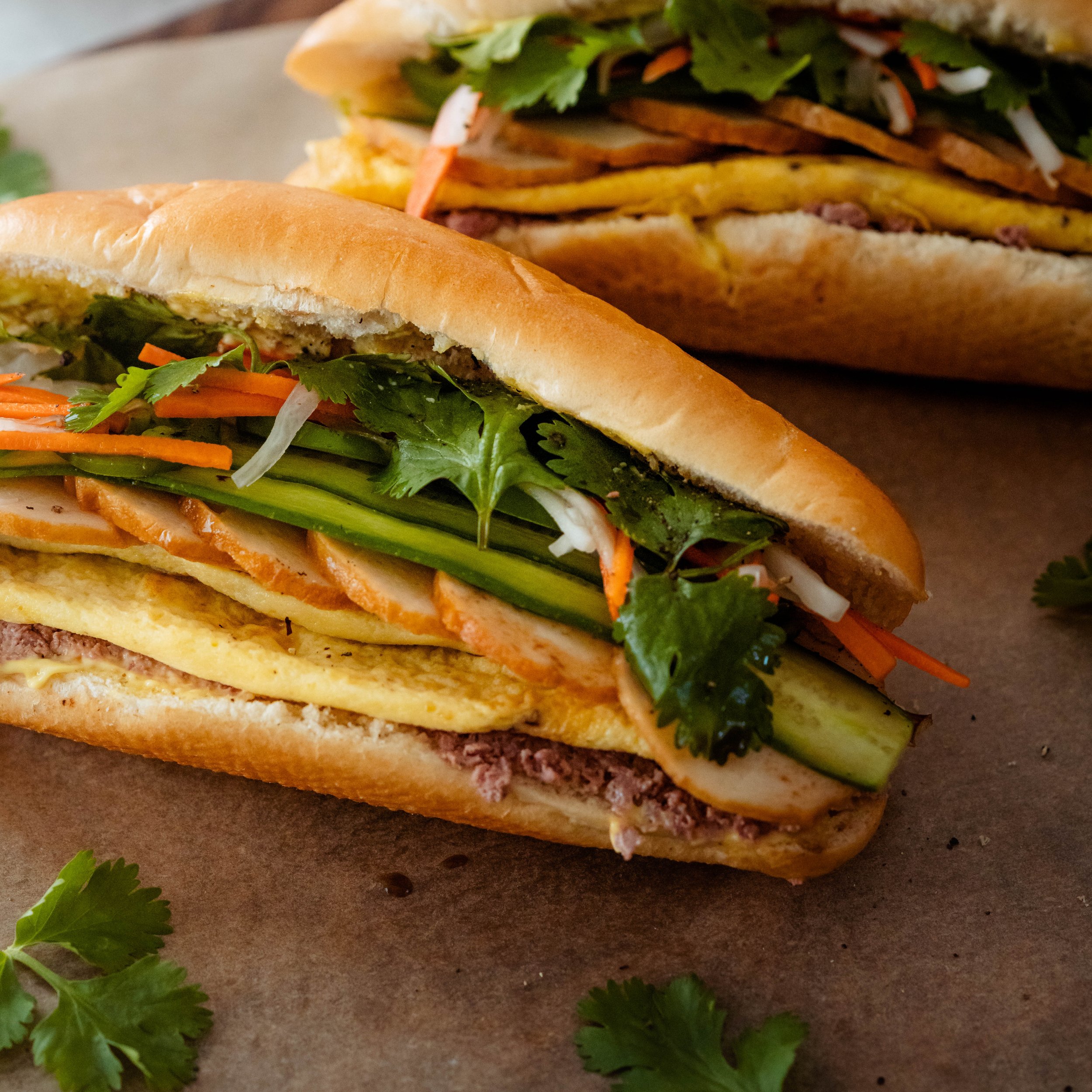
Crisp crust. Fluffy interior. A rush of pickles, herbs, and savory richness in every bite. Bánh mì is one of those foods that feels instantly comforting and endlessly exciting at the same time.
But this iconic Vietnamese sandwich didn’t appear overnight. Behind that crackly baguette is a layered history of colonization, adaptation, resilience, and everyday ingenuity. What looks simple at first bite carries over a century of cultural exchange — reshaped by Vietnamese hands into something entirely its own.
The History of Bánh Mì — How Vietnam Turned Colonial Bread Into a Cultural Icon
French Colonization and the Arrival of the Baguette
In the mid-1800s, France colonized Vietnam and introduced European staples such as baguettes, butter, pâté, and cured meats. These foods were initially markers of privilege, accessible mostly to French colonists and wealthy Vietnamese elites. Wheat had to be imported, making bread expensive and uncommon for everyday people. During this time, bread in Vietnam was foreign, both culturally and economically.
Reinventing the Baguette for Vietnam
Vietnamese bakers didn’t simply adopt the French baguette, they transformed it. To adapt to local ingredients and climate, rice flour was added to the dough. The result was a lighter loaf with a thinner, crispier crust and a soft, airy interior. The baguettes were also made shorter and more practical, ideal for quick meals in a bustling, humid environment. This version of the baguette became uniquely Vietnamese, distinct from its French ancestor.
From Colonial Luxury to Street Food Staple
By the early 20th century, Vietnamese vendors began filling baguettes with local ingredients. Pickled carrots and daikon (đồ chua), cucumbers, cilantro, fresh chilies, and Maggi seasoning brought brightness and balance to the sandwich. Proteins shifted from European cold cuts to Vietnamese favorites such as grilled pork, caramelized pork, meatballs, eggs, sardines, tofu, and pâté adapted to local tastes. This was the moment bánh mì stopped being “bread with fillings” and became a Vietnamese street food.
Saigon and the Birth of the Modern Bánh Mì
The bánh mì we recognize today took shape in Saigon during the 1950s. Vendors perfected the balance of flavors and textures: hot and cold, rich and fresh, crunchy and soft, fatty and acidic. Affordable, portable, and deeply satisfying, bánh mì became the ideal city food — accessible to students, workers, and families alike.
War, Migration, and Global Spread
After the Vietnam War, Vietnamese refugees carried bánh mì with them to countries like the United States, France, Australia, and Canada. In diaspora communities, the sandwich continued to evolve. New proteins, larger portions, and fusion flavors emerged, while the core elements remained intact. By the early 2000s, bánh mì had entered mainstream food culture, appearing in food trucks, bakeries, and chef-driven restaurants around the world.
Why Bánh Mì Matters
Bánh mì represents more than culinary fusion. It tells a story of reclaiming colonial influence and reshaping it into something distinctly Vietnamese. It’s working-class food elevated by balance, intuition, and necessity. Instead of erasing history, Bánh Mì absorbs it and turns it into something joyful and iconically Vietnamese.
A Note on the Name
In Vietnamese, “bánh mì” literally means “bread.” If you order bánh mì in Vietnam, you may be asked, “Bánh mì gì?” as in which kind? The sandwich is so ingrained in daily life that the word itself remains wonderfully simple. From colonial import to global icon, Bánh Mì proves that some of the world’s best food comes from adaptation, not invention.
The Vietnamese Baguette: What Makes Bánh Mì Bread So Different?
At first glance, the bread used for bánh mì looks like a French baguette and historically, that’s no coincidence. But one bite tells you immediately that this loaf plays by different rules. Lighter, crispier, and built to hold bold fillings, the Vietnamese baguette is a quiet masterpiece of adaptation.
To understand why bánh mì works so perfectly as a sandwich, it helps to look closely at the bread itself, and how it compares to both the French baguette and Mexico’s bolillo roll.
The Vietnamese Baguette (Bánh Mì Bread)
The Vietnamese baguette was designed with purpose. It needed to be affordable, quick to bake, easy to eat on the go, and sturdy enough to hold fillings without overwhelming them.
Key Characteristics
A blend of wheat flour and rice flour, which reduces gluten
An ultra-thin, crackly crust that shatters when bitten
A light, airy interior with minimal chew
Shorter, lighter loaves that are easy to fill and eat
Rice flour plays a crucial role here. By lowering gluten development, it creates a softer crumb and a more delicate crunch. The bread doesn’t resist the bite, it yields to it.
This makes bánh mì bread ideal for stuffing with rich pâté, grilled meats, pickled vegetables, herbs, and sauces without feeling heavy or overwhelming.
How It Differs From the French Baguette
The French baguette is a bread of restraint and tradition, meant to be savored on its own or with minimal accompaniments. Its structure and chew are part of its identity.
French Baguette Traits
Made with 100% wheat flour
Thicker, chewier crust
Elastic, structured crumb
Long fermentation for complex flavor
While perfect for tearing and dipping, a traditional French baguette can feel dense and stubborn when overloaded with fillings. It wasn’t designed to be a sandwich workhorse in the way bánh mì bread is.
Is It Similar to a Mexican Bolillo?
Surprisingly—yes. Of all common breads, the Mexican bolillo is one of the closest cousins to the Vietnamese baguette in function, if not exact texture.
Bolillo Characteristics
Soft, pillowy interior
Thin to medium crust
Mild, slightly sweet flavor
Designed specifically for fillings like tortas
Where They Overlap
Both prioritize stuffability over chew
Both are everyday breads meant to be eaten fresh
Both support bold fillings without dominating them
Where They Differ
Bolillos are softer and less crackly
No rice flour, resulting in a more bread-like crumb
Vietnamese baguettes have a lighter structure and sharper crunch
A Shared Colonial Legacy: How French Bread Shaped Vietnam and Mexico
The similarities between the Vietnamese baguette and the Mexican bolillo are not accidental. Both breads trace their origins to French influence during periods of colonization and political intervention.
In Vietnam, French colonial rule beginning in the mid-19th century introduced wheat bread, baking techniques, and the baguette itself. Vietnamese bakers adapted these methods using local ingredients like rice flour and adjusted the bread to suit climate, cost, and eating habits.
Mexico’s connection came slightly earlier and through a different path. During the 19th century under Emperor Maximilian I, a European monarch installed with French support—French bakers and culinary traditions entered Mexican cities. Over time, the baguette was reshaped into the bolillo, softer and heartier, designed to pair with local fillings and stews.
In both countries, what began as elite European bread was transformed into everyday food for the people. The result was not imitation, but reinvention: breads built for stuffing, portability, and bold local flavors.
These parallel evolutions help explain why bánh mì bread and bolillos feel like cousins. They share a common ancestor, shaped by different cultures responding creatively to the same foreign influence.
Why the Bread Matters
Bánh mì isn’t just about the fillings — it’s about balance. The bread’s lightness allows bold flavors to shine without fatigue. It’s engineered to disappear just enough so everything else can sing. That’s the genius of the Vietnamese baguette: it doesn’t demand attention, but without it, the sandwich simply wouldn’t work.
Recipe — Banh Mi Ga
Makes: 10 Rolls
Best Substitutes for Bánh Mì Bread at Home
If you don’t have access to a Vietnamese bakery, bolillos are often the best supermarket alternative. Look for rolls that are light, not dense, and avoid overly rustic or artisanal baguettes. A quick toast and a burst of steam in the oven can help mimic that signature bánh mì crunch.
The Essential Role of Pâté
Pâté is the quiet anchor of bánh mì. Borrowed from French cuisine but transformed through Vietnamese taste, it adds richness, depth, and cohesion to the sandwich.
Vietnamese pâté is typically:
Made from pork liver and fat
Smoother and slightly sweeter than French pâté
Seasoned with garlic, shallots, and sometimes fish sauce
Rather than standing alone, pâté acts as a flavor glue, binding meats, vegetables, and bread into a unified bite. Even when used sparingly, it provides umami and softness that balances the baguette’s crunch and the pickles’ acidity. In many ways, pâté represents the heart of bánh mì itself: a colonial ingredient absorbed, adapted, and made essential.
A Thoughtful Alternative to Traditional Pâté
If you’re looking for halal- or kosher-friendly adaptations, beef liver pâté can be used as a substitute for traditional pork liver pâté. Because beef liver has a more assertive, mineral-forward flavor, it pairs best with bolder fillings such as grilled beef, lemongrass beef, or caramelized onions. When using beef liver pâté in bánh mì, apply it in a thin layer so it enhances the sandwich without overpowering the balance.
Why Understanding Bánh Mì Makes It Taste Even Better
Knowing the history behind bánh mì adds depth to every bite. The balance of rich pâté and bright pickles, airy bread and bold fillings, reflects generations of Vietnamese cooks refining flavors for everyday life.
As bánh mì continues to evolve around the world, its heart remains the same: accessibility, balance, and bold flavor built on simple ingredients. If you’re ready to experience bánh mì the way it was meant to be enjoyed, this recipe walks you through creating a classic, well-balanced version at home — crispy baguette, savory fillings, and all. Whether it’s your first time making it or your fiftieth, this is one sandwich that always rewards the effort.
SHOP THIS POST
If you recreate our recipe
TAG & FOLLOW @TheSpiceOdyssey
Stay up to date with us on on Instagram, Pinterest, Youtube and Facebook.
Keywords: bánh mì history, Vietnamese sandwich, bánh mì recipe, Vietnamese street food, traditional bánh mì